Safe routes without turning it into an institution
Making the garden easier to enjoy
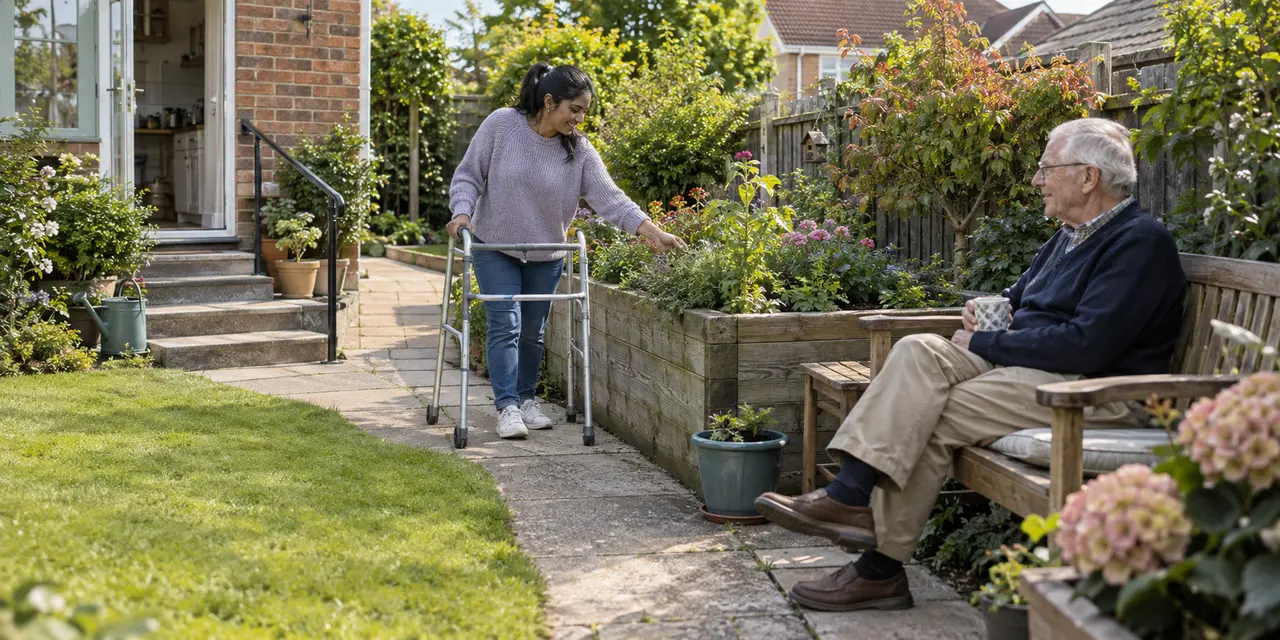
The garden may be the main route to a side entrance, a place to sit with visitors or an activity someone wants to keep doing. A firm path and a well-placed seat can matter more than a complete redesign. Start with the part of the garden the person misses using.
Connect the door to a useful destination
A path should lead somewhere worth reaching: a sunny seat, shed, washing line or raised bed. Check the threshold, first step and door movement before considering the path alone.
The user may need a level area to stop and close the door. Routes should remain clear when plants grow, bins are moved and outdoor furniture is in use.
Firm, even and well drained surfaces
Loose gravel is difficult for small wheelchair castors and walking frames. Uneven slabs collect water and create trips.
A suitable surface should provide grip when wet without becoming so rough that it catches feet or wheels. Crossfalls and drainage need control so water doesn't run towards the house or freeze in a hollow. Contrasting edges can help where sight is reduced.
Steps, ramps and handrails
Where there is space, a gently graded path may be easier than a short steep ramp. Level resting areas help on longer slopes. Steps should be even, visible and served by a secure rail where needed.
Don't add a rail that narrows the route or has an exposed end which catches clothing. Changes near boundaries or shared access may need permission.
Think about the seasons. Fallen leaves can make smooth paving slippery, while low winter sun produces glare and deep shadows. A bench placed in shade may be pleasant in summer but cold for much of the year. Choose planting that doesn't regularly drop thorns or wet growth across the route.
Gates should be light enough to operate and have latches that can be reached without losing balance. If the garden includes a pond, steep bank or power tools, include those risks in the plan without assuming the person must stop gardening. A small working area near the house can preserve the parts they enjoy even if the far end becomes less practical. Keep an outside tap and tools close to that area, with secure storage that is easy to open.
Places to sit and work
A stable seat with arms helps somebody lower and stand. Put it where there is shelter, a pleasant view and a firm area for feet or mobility equipment. Raised beds reduce bending, but the width must allow the middle to be reached. A ledge can provide support or a place for tools. Avoid sharp corners at seated height.
Reduce maintenance without removing the garden
Smaller planted areas, ground-cover plants and accessible taps can reduce work. Long lightweight tools may help, though very long handles can increase strain. Store tools near where they are used instead of carrying them across the garden. Automatic watering needs frost protection and an ordinary way to turn it off if it leaks.
Ask for a measured proposal
A landscaper should show levels, gradients, drainage and materials, not just an attractive plan. An occupational therapist can explain the user’s movement and reach.