Who to ask before work begins
Assessments and help with the cost
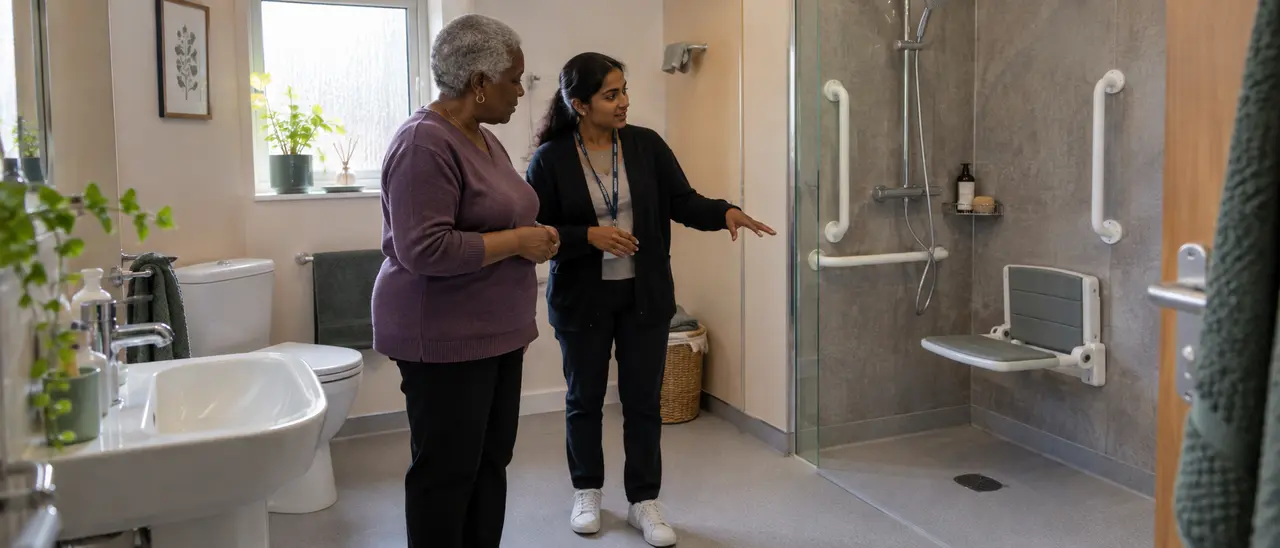
If a change is needed because of disability, illness or reduced mobility, speak to the council before ordering major work. An assessment may identify a simpler answer and, in some cases, financial help. Funding systems differ across the UK, and starting work too soon can affect an application. Keep notes of the tasks that are difficult, any falls or near misses, and help already being provided. This gives the assessor a clearer view than a general request for a new bathroom or stairlift. If discharge from hospital depends on changes at home, say so at the first contact and ask which team is coordinating the plan. Waiting lists and local arrangements vary, so record dates, names and what you have been told.
Ask the council for the right assessment
In England, the council’s adult social care team can explain how to request a care needs assessment or an occupational therapy assessment. Children’s services may be involved for a disabled child.
The assessor will normally look at the tasks that are difficult, the person’s safety and the layout of the home. Scotland, Wales and Northern Ireland use different routes, so use the relevant council or health and social care service instead of assuming the English process applies.
What an occupational therapist may look at
The assessment is about function: getting through the door, using the toilet, preparing food, transferring from bed or managing the stairs. Explain what happens on a bad day as well as a good one. Mention falls, pain, fatigue and help already provided by relatives. Have medical information and tenancy details available if requested. The assessor may suggest equipment, a change in technique, minor work or a larger adaptation.
Disabled Facilities Grants in England and Wales
A Disabled Facilities Grant can help pay for eligible work that the council considers necessary and appropriate, provided it is reasonable and practicable for the property. Adult applications are normally means tested, with different rules for a disabled child.
The council may need plans, quotations and permission from the owner or landlord. Don't assume every preferred design will be funded, and don't begin work until the council confirms what it requires.
Tenants, landlords and shared areas
Tenants can ask for an assessment and may be able to apply for help, but the landlord’s permission may be required for structural work. Housing associations and councils may have their own adaptations teams.
In flats, entrance doors, lifts and corridors may be shared or controlled by the freeholder. That can add permissions, fire-safety questions and service-charge issues. Find out who owns each part of the route before commissioning alterations.
Other possible sources of help
Some councils offer small grants, loans or handyperson schemes outside the main grant system. Charities linked to a former occupation, condition or local area may sometimes contribute.
VAT relief can apply to certain goods and services supplied to disabled people under specific conditions; the supplier should explain the declaration and what qualifies. Be cautious if a salesperson promises that funding or tax relief is guaranteed.
Useful official starting points
Read the current rules instead of relying on an old leaflet or a neighbour’s experience.